
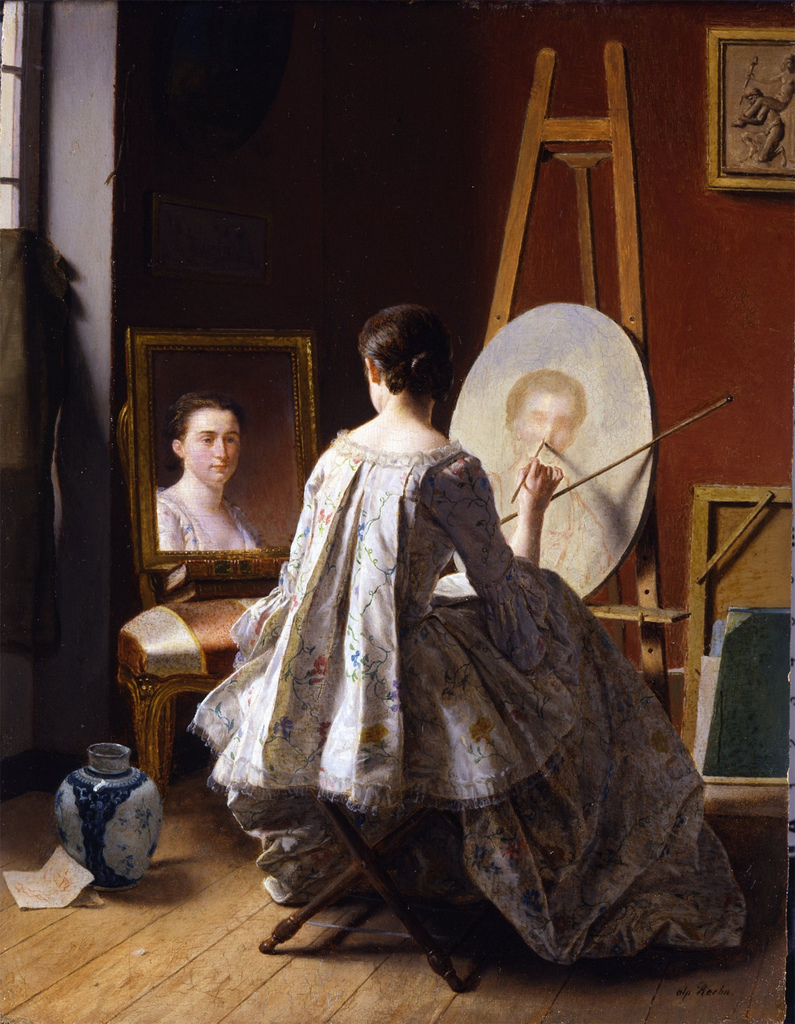
I have chronic ailments that require management, but normally, I’m healthy and happy enough. However, a body is a complex system, and it doesn’t take much to throw it out of whack. So, a couple of weeks ago, I was abruptly overwhelmed by profound sadness that had no apparent cause. I’m waiting for a callback to schedule a mental health appointment, but, given that I’ve barely seen the sun since Christmas, I suspect I have seasonal affective disorder—SAD—which explains not just my current bout of symptoms, but also my low spirits of the last few winters. (Yes, I am giving light therapy a try.)
Writing is a habitual discipline. My habit and discipline won out over my desire to do nothing at all. My cognitive ecology was screwed up, words came in a kaleidoscope rather than in a coherent stream, and some days I would manage to produce only a page, all of which I would cross out the next day. Still, I wrote four hours a day, in my armchair by the fireplace, while outside it snowed, rained, then went into a deep freeze, and the rabbits left footprints in the snow. A large mystery-creature plowed a path across the garden. A major limb broke on my neighbor’s beautiful, ancient Japanese maple tree.
For Painter, the protagonist of my book, things are grim. Two of her friends have been killed as punishment for something she did, and she has gone into hiding, bringing the kids who live with her. Death left her responsible for a business that employs many people, therefore she can’t hide for long. She doesn’t know what to do now, and she’s struggling with grief and fear.
A fantasy novel is not an autobiography. My books express my longing but if my reality is present, it’s expressed in symbols and metaphors. But now I was a sad person, composing a first-person narrative that was fictionally composed by a sad fictional person. I didn’t have to look far to know what sadness feels like, but to express that feeling–while feeling it–wasn’t easy. Here are some strategies I used:
Observe details and use plain language and declarative sentences.
An grief-stricken person can only focus on the immediate surroundings, the things that are simple and real. They can’t hold together the parts of a complex sentence.
A small table and single chair, a pallet rolled up on the shelf, a heavy, patterned curtain to draw across the doorway, a piss bucket. I went in and put my roll of paper on the table. I untied my paint box from my waist, and lay it down. Suddenly, I was so tired I feared I’d fall over.
Use Painter’s narrative distance.
Because she is writing about her fictional experience after the passage of several months, she can comment upon her own story:
The boys were playing a dancing game…”I getting too timid,” I muttered as the boys stamped past, with a turning, twisting step that would have landed me flat on my face had I tried it. I lit the fire and hung the pot, and the smoke was drawn into the chimney. Also, I hung a pot of water for washing and bathing. Certainly these were tiny accomplishments. But on the day after my friends had been killed, it felt like all I could do. My mind was a dirt-clogged magneto: intact, but incapable of producing light.
When I close out this mundane, detail-heavy paragraph with a metaphor, the poetic language is distancing; it reminds the reader that Painter (in her story present) is reflecting upon her mind-state in the past (How about that, my mind was like a dirt-clogged magneto). This observation would be unconvincing were she in an active state of misery.
Use my subjective state. Why not?
After a few days of stubborn writing, I visited Rosemary R. Kirstein (never, never underestimate friendship), and my brain chemistry began to normalize. I discovered a parallel between Painter’s story and mine. Why not use it?
I went into my room and painted. While the kids played, argued, sang, punched each other, and competed in another dancing game, I painted. It was not easy to focus my muddied attention, but doing it was a relief, for painting was a flood wall that held back the waves of sorrow.
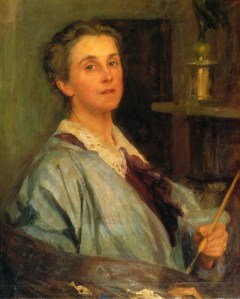
Writing about Painter’s misery had made me feel better. It seems feasible that painting might make her feel better.
Writing Badly is Better than Not Writing
I wasn’t writing well with this chapter—I threw away nearly all of the first draft, and rewrote portions of the second draft before they were typed. It might not be any good. I certainly will revise it again. But I completed the chapter, and, despite myself, it does the job, and a good turning point even popped up out of the sediment: Painter realizes something. I don’t want to tell you exactly what, but it shifts her approach, from shrinking away and hiding to actively confronting her enemy using the resources she does have. I want her realization to land in such a way that it gives the reader a similar “aha” moment, and they anticipate what might happen next. They’ll be wrong, and matters will keep getting worse, but at this moment they’ll think they know how the story might end.
I hope so, anyway. Maybe I’ll give this chapter to Rosemary (Rosemary R. Kirstein) before I revise it again, and see what she thinks of it. (Is it a mess? Does it work?) I need to detach from it before I can revise it properly, and maybe I can accomplish this by riding on her detachment.
I’ll show her my excruciating progress with playing B minor and B flat on my ukulele.
I’ll make fajitas.

Subscribe below to get an emailed notification whenever I publish a new post. Also, please consider buying my books. Regarding my Elemental Logic books, Michal Osier recently wrote the following on Facebook, in response to a request “for books to read that meet Ursula K LeGuin’s call for stories ‘of a larger reality’ to combat what she saw (correctly) as the ‘fearfulness and technology-obsession’ to come.”
“I’ve reread Laurie J Marks’ Elemental Logic quadrology at least 5 times. It asks such questions as How can a peaceful people, invaded by a militaristic group, survive? Can they maintain their humane values? What do they stand to lose if they can’t? How can the war end? What do both sides need to learn to make peace possible? What do they need to do? What role does community play? What of their own history have they lost, that they need to find and understand again? What roles do the “protected tribes” play within the majority population? and much more.
“And Laurie’s tale is very much lesbian and woman focused – gay men, too, and the extended families that are the basic social structure. It’s got a lot of a specific version of elemental magic in it, that both allows the story to reach its denouement (peace), and relies so deeply on human archetypes that it’s still a gorgeous read for us non-magical humans. It’s also often funny, deeply compassionate, unflinching about what violence does, and infinitely creative in its characters, plot, and humanity.
“Can I recommend it more? Mind you, it starts gory, and continues so for quite a while – the land of Shaftal is at war. But I hope you’ll quickly find yourself drawn in by the keen intelligence of the storytelling, by the layers and the complexity of the cultures, and by the core human values of the protagonists.
“Laurie J Marks’ Elemental Logic series: Fire Logic, Earth Logic, Water Logic, and Air Logic.”


 Laurie J. Marks
Leave a reply to Laurie Marks Cancel reply