
Raising Readers
My mother, Gretchen Berlin, graduated from University of California, Santa Barbara in the mid-1950s with a degree in Home Economics. She was planning to teach, but got married to Don Marks and worked as a homemaker and child-rearer until her youngest graduated from high school, and then she went to work for a small publisher. My father, who graduated from the same university at around the same time with a degree in Industrial Arts, did teach for a while, then became a quality assurance engineer. My parents were extraordinarily practical people who happened to love reading (though they never read the same books).
More than once, my mother longingly mentioned her high school dream of being a librarian on a passenger ship, and even though that dream would never be fulfilled, she never stopped yearning to travel, or to be able to read uninterrupted. She frequently mentioned attending a class/workshop on promoting a love of reading and literature in young children. Following the guidelines of that class, she or my father read to us every day—not picture books, but children’s literature like Alice in Wonderland, Wind in the Willows, and The Phantom Tollbooth. Also, though my parents were far from wealthy, my mother filled the living room bookshelves with gorgeously published and illustrated classics of the previous century. In the summer, she took us and our friends to the public library every week. Despite the steady stream of new books coming into the house, I was a fast, precocious reader who rapidly plowed through everything I checked out, then read all the books my friend Sara had checked out, then re-read the books I had checked out, and finally was left bookless, with several days remaining before the next library visit . So I read literature the bookshelves, completely without context or adult assistance, and by tenth grade I had studied Gustave Dore’s illustrations of The Rime of the Ancient Mariner, and had read: at least a dozen Charles Dickens novels, as well as Jane Eyre (many times), all three of the Three Musketeers books (lots of sex, which I found incomprehensible), The Woman in White, The Portrait of Dorian Gray, and War and Peace by Tolstoy.
War and Peace????
War and Peace was way over my head, and I don’t remember much of it, nor have I ever felt inclined to read it again. I do remember two things: First, I couldn’t keep track of the multiple storylines because each character had multiple names and titles, and, even using the cheat sheet thoughtfully provided by the publisher, it was nearly impossible for me to follow the plot. Second, there were many minor events the significance of which Tolstoy must have assumed were obvious and never explained. Little wonder I remember almost nothing else about the book. (Though my youthful perseverance in reading such a massive and bewildering book all the way to the end is astonishing.)
Not a book review.
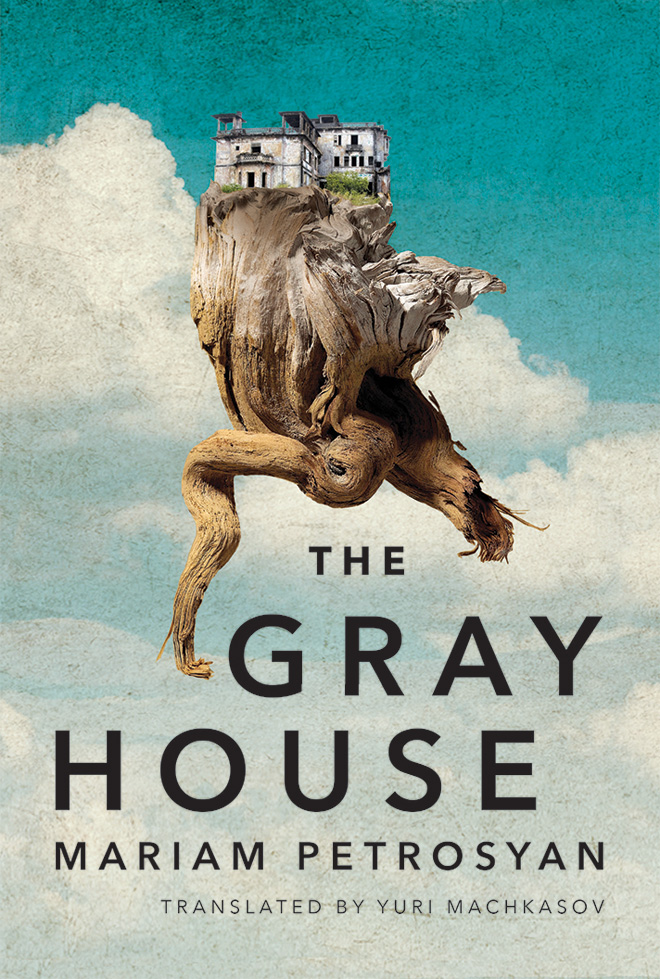
Some five decades later, I still read 2-3 novels per week—which would be horrifically expensive if I didn’t do a lot of re-reading. This week I’ve been re-reading The Gray House by Mariam Petrosyan, which was published in English in 2017, but was first published in Russian in 2009. Now, fourteen years after Petrosyan’s first and only book was published, her presence on the English-language internet is minimal, so all I know is that she is an Armenian visual artist whose best-selling, award-winning book was first published in Russia, then translated into seven other languages. I wasted a fair amount of time trying to figure out why an Armenian would write in Russian, and am forced to assume it’s related to the fact that Armenia used to be in the Soviet Union. Petrosyan worked on her book for 18 years, and the print version is 736 pages long. The translators all deserve medals of honor.
War and Peace is only 100 pages longer than The Gray House, and my experience of reading The Gray House this week felt comparable to reading War and Peace, though, unlike Tolstoy’s book, I have the knowledge and developmental readiness to enjoy and be amazed by The Gray House. It has many characters and many point of view shifts, including multiple first person narrators, and it has a meandering, discontinuous plot, which not only jumps back and forth within a 6-year (or so) time frame, but also, like Tolstoy, changes the character names and leaves it to the reader to determine the connections of past and present based on clues in the text. The Gray House has complicated, enigmatic characters, some of whom are departed and can only be known by their traces. There are weird potions (drugs? alcoholic drinks?) and an unexplained explosion (lightning strike? Bomb? Sign from heaven?). The house seems to be aware of its residents, and some of them, intentionally or inadvertently, find themselves in another dimension. There are strange rules and customs (the Law, or the Game), social groupings, and numerous unexplained and unnarrated deaths, including one (two? three?) murder/s. Some of the people may not be people. Others belong to categories that must be figured out. The book uses no tropes at all and explains very little, therefore even an experienced fantasy reader like myself is forced to rely on her wits. It has a mysterious, ambiguous ending, and when you finish the last page, I predict that you will turn to the first page and start reading it again, thinking, Now I can put the pieces together. If you read several hours a day, it could take 2-4 weeks for you to read and then re-read the book. Consider yourself warned.
The Guardian review classifies the book as magical realist, which seems as good a category as any. I classify it as the kind of book I like: not particularly allied to fantasy or any other genre, marvelous and mysterious, crammed with eccentric and well-realized characters. So I won’t even try to offer a plot summary or to explain the story situation, because any such effort might cause your expectations to interfere with your ability to experience the book as it is. It is a book to be figured out, floundered around in, and re-read. It is unique.
Some wild guesswork about the author
I can only tell myself a story about the author based on a few fragments of fact and my own experience, so please read the following as fiction. For 18 years the author moved back and forth between worlds. In the real world, she worked, negotiated modern society, married, and raised children. At the same time, she lived in the alternate world of her fiction. She wasn’t writing the story for publication. Instead, writing was the method by which she occupied an engrossing alternate reality. Then, her book was published due to a fairy-tale accident. She had left Armenia for a job in Russia, and when she returned home to Armenia she left a copy of her book with a friend. It was read and passed from hand to hand, became an underground sensation, and by this random method eventually came to the attention of a publisher. It was published, became a bestseller, and won several awards. And the author flatly stated that she would not write another book.
I think that publication of the book had been a kind of death for her. (As is true for any book, but more extreme in her case.) After all the years she spent living inside and departing from the book, the book itself departed from her, to inhabit another world, a world in which it no longer belonged to the author. It was published, but, for her, it was gone.
It’s a tragedy, I guess. But not my tragedy.
Last night as I was happily re-re-reading it in bed, half asleep I turned to Deb (who has never read the book) to ask her something about one of the characters, as though they were a living person we both knew. Now, although I’m reading the ebook, I just bought it in hard copy. Ebooks are too fleeting; a person can’t analyze or study them properly to figure out the mechanics that hold the book together. I really want to understand how Petrosyan did that, so I can learn more about my craft. But if I do that, will I, like Petrosyan, push the book into a different dimension, a dimension in which I can analyze it but not enjoy it? I want the book to remain mysterious, and therefore I should not analyze it at all. But I want to learn from the book. I don’t know whether I will have the cake or eat the cake. I really wish I could do both.


 Laurie J. Marks
Leave a reply to Yuri Machkasov Cancel reply