

I’m Nobody! Who are you?
Are you – Nobody – too?
Then there’s a pair of us!
Don’t tell! they’d advertise – you know!
How dreary – to be – Somebody!
How public – like a Frog –
To tell one’s name – the livelong June –
To an admiring Bog!
(Emily Dickenson)
In one of my high school English classes, we traveled to Los Angeles to see Hamlet at the Mark Taper Forum. In the play-within-the-play an actor wore a giant, stylized, highly-decorated phallus, and I felt like I was going to die of stupefaction right there in the audience. About ten years later, at a Pride parade in San Francisco, a man wearing only satyr’s horns pushed past me in the crowd. He had a nice tan.
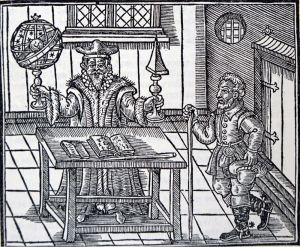
Thank goodness it is possible to recover from prudishness.
Yes, this is a very roundabout way to arrive at the topic of characterization. Unlike Shakespeare with Hamlet, I don’t write (and don’t want to write) tragedy, but the concept of tragic flaws is as useful now as when I first studied it in that English class. Here is an explanation of tragic flaws from Dr. Wheeler’s “Literary Terms and Definitions” (https://web.cn.edu/kwheeler/lit_terms_H.html#hamartia_anchor)
HAMARTIA: A term from Greek tragedy that literally means “missing the mark.” Originally applied to an archer who misses the target, a hamartia came to signify a tragic flaw, especially a misperception, a lack of some important insight, or some blindness that ironically results from one’s own strengths and abilities. In Greek tragedy, the protagonist frequently possesses some sort of hamartia that causes catastrophic results after he fails to recognize some fact or truth that could have saved him if he recognized it earlier. The idea of hamartia is often ironic; it frequently implies the very trait that makes the individual noteworthy is what ultimately causes the protagonist’s decline into disaster.
On Making my Characters be Flawed (and miserable)
I wish I were a better stylist, but I do manage to write some okay characters. I like my characters a great deal, I want them to succeed and be good people, and I hate making them suffer. As a result I’m always in danger of writing a dull book, and frequently must remind myself that if matters don’t go from bad to worse nobody will want to read it.
A complex character has flaws, even if those flaws don’t necessarily lead to their downfall. Also, the more contradictory they are, the more interesting they are. Fantasies usually have external conflicts, as one benefit of the genre is access to a wealth of symbolism by which the internal can be made external. While it doesn’t hurt to give a character internal conflicts as well, I won’t undermine my own reality by explaining the characters’ thoughts using inappropriately psychological language.
A Character Called Painter
The protagonist in my Work-In-Progress is called Painter. People in her town, who rarely know their parents and therefore lack given names—that’s how bad things are in this world—often are named after their profession. I’m still figuring out Painter’s voice, one of many interesting challenges when writing with a first-person narrator. She’s smart, eloquent, and well read, but most people of her status can’t read and write at all and therefore her internal voice is quite different from her conversational voice. She explains and describes events very clearly, but when on a painful topic she becomes distant and indirect, to conceal how sensitive she is. Like with epistolary fiction, her written words are intended to be read by a specific character, but that person is not her friend—it’s the antagonist. Painter is in a complex rhetorical situation that continually becomes more complex.
The actual reader, the person like you who someday reads the actual book, will feel some tension between their values and Painter’s. Painter does what she must to survive, and no one survives in a state of unsullied purity. Like everyone she knows, Painter takes advantage of the orphans who proliferate in her town. A pack of them live with her and engage in dangerous work in order to earn their livelihood. Painter endeavors to teach them some skills and to give them a path to adulthood, but also tries not to care about them so it will be less painful if they die. Like everyone else, Painter is trapped, unable to go anywhere, unable to change her circumstances, and struggling to keep matters from getting worse. Her tragic flaw is her love of art, externalized in the form of an enchanted paintbrush, which gets her into deep trouble because she can’t bring herself to get rid of it.
The Writer’s Tragic Flaw
As a writer, I also have a tragic flaw: I am retiring and socially-awkward, and am terrible at and exhausted by performance. In other words, I am an introvert. This characteristic appears in my writing in some peculiar ways. I labor to write interesting dialogue. Like me, my protagonists tend to be solitary, isolated, and relatively friendless. In addition to being an introvert, I have an impaired ability to remember faces, which is called prosapagnosia, and I frequently forget to describe characters’ faces. With the aid of Google, I’m actually collecting faces for characters in the story, which is a rather odd process, because images of people on the Internet frequently are too pretty to be interesting.
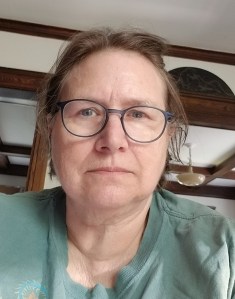


 Laurie J. Marks
Leave a reply to Laurie Marks Cancel reply