

What I’m (re)reading now: everything written by Claire North.
What I’ll read next: The Book of Love by Kelly Link (available February 13)
Every Monday at 12 noon, my helpful calendar reminds me to write a new blog post. I don’t always have ideas or wherewithal, and when I do, writing the post frequently uses twice as much time as I expect. After I started revising my book, it became more feasible for me to write a post whenever I finished a chapter, which stretched out the interval between posts. Yet I have published 25 fairly substantial essays in eight months, without any specific external motivation. If someone were paying me to do it, I might do it more often, but not necessarily any better.
Big Things Happen
After floundering through revision of Chapters 6 and 7, working on Chapter 8 was a treat: a chapter with a well-defined beginning, middle, and end! A chapter in which Big Things Happen! I didn’t have to be thoughtful, or to manage the balance of depicting my characters’ emotional states, avoiding heavy-handedness and pop psychology—there was no time for it! But, as I worked and enjoyed it this week, I frequently remembered something Rosemary Kirstein observed, that a book needs a balance of action and inaction/reflection. Reflection is “paid for” by action—the action gives the characters things to think about. (‘Oh dear, what did I do? And now what do I do?”) And, for readers, action generates engagement which is then “spent” as they more effortfully focus on the less active parts of the story.
It should be no surprise that, for me, the action part is easy to write and the thinking part is hard. I act easily; I think uneasily; I regret frequently. I wonder if my wife, Deb, feels like she has spent our entire time together with her foot on the metaphorical brakes.
Rhythm, Internal and External
In Chapter 7, Painter, stunned by loss and paralyzed by fear and anxiety, withdraws to a safe place. Then, having accepted her newly-inherited responsibilities, she returns home and begins coming to grip with her altered circumstances. In Chapter 8 she is still feeling low, and spends a lot of the day in solitude, painting, though there are hints of a supportive community coalescing around her. She has an idea, which she puts into practice, and abruptly it becomes an opportunity. She acts, which creates a new problem, so she acts again, then has to be rescued by a couple of the kids who live with her. This chapter feels like the turning point of the story, the place that Painter shifts from coping with life to acting upon her circumstances, positioning herself to become a person who uses her limited resources to fight back against her better-equipped enemy.
Here is what that shift looks like. (Remember, Painter is the “author” of this account, and her “reader” is the antagonist.)
I thought, I can jump through right now and kill you…
If I painted my fury and hatred, it would have been a bolt of flame, like lightning…
You stepped back, startled, and crashed into the cabinet behind you.
You saw me. You saw an indistinct, angry figure in a dim and dusty room, much like your own. I doubt you saw lightning bolts, but you saw my intelligible fury.
Then, action. Because long and complex sentences slow down the story, I start using simplified subject-verb sentences (I imagined, I smiled, You blew, you fled.) If you’ve been reading my blog for a while, you have probably noticed that I’m happy within a tangle of dependent clauses, but I can do simple too.
I imagined you dead. I might even have smiled. You hastily blew out your lamp and fled the room.
The rhythm here is mostly anapestic: duh duh DUH duh duh DUH. Duh duh DUH duh duh DUH. Duh DUH duh duh DUH duh duh DUH duh DUH duh DUH. It’s very fast and gripping, like a drum.
Then, a couple of pages of longer, after Painter catches her breath, there are slower, more reflective sentences:
These precautions seemed silly to me, which illustrates how indifferent I was to danger that day.
Then there is more action, fragmented, with short paragraphs and confusing, choppy dialogue:
Darkness. Desperate coughing. Thunderous pounding. “What?” I mumbled.
“Fuck you, Painter!” said Kneejerk. “Wagwag, hurry up!”
Wagwag: “Make me healthy.”
Muffled yelling. A resounding bang.
“Wagwag!” Kneejerk cried.
Every sentence begins with a stressed syllable, mostly alternating stressed and unstressed: DUH duh. DUH duh. (Yep, trochaic rhythm.) I’m trying to make you feel how Painter receives a bit of input, then struggles to process it:
Darkness. (Where?) Desperate coughing. (Huh?) Thunderous pounding. “What?”
Victoria Station, Larger than My Mind!
I’ve been writing for more than five decades, and I’m currently able to do some things without apparent effort because I put in a lot of effort in the past. Rhythm in prose, for example, comes from poetry, which I studied intensively during my early college years. During a semester in England, I copied examples of the different rhythm patterns in an A5 notebook. (I had always assumed there was only one size of paper, so this new size really stuck with me.) I was doing a self-guided course on writing poetry, and had assigned myself to compose examples of each traditional poetic form, each poem based in my then-current experiences of being a stranger in a strange land. Nearly 50 years later, I remember one line of iambic pentameter, part of a Shakespearean sonnet that may have survived, buried in my files somewhere, if the mice haven’t made a nest with it: “Victoria Station, larger than my mind!”
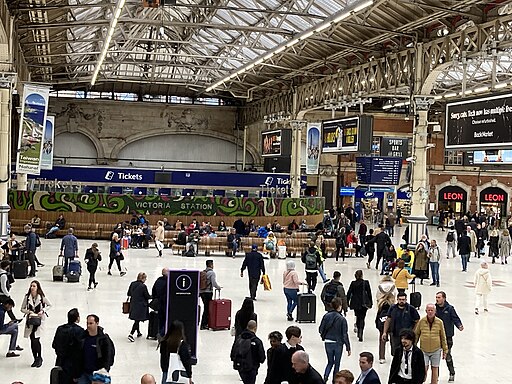
Later, as a newly-published author, when I started participating in readings at cons, I was startled to discover how difficult my sentences were to read out loud. That started me on a new regime of revising my sentences for “speakability,” or rhythm. After a couple of years I didn’t have to revise for it anymore. Rhythm is integrated into my composition process, and I can’t not do it.
Take a Load off Fanny!
Many—most—aspects of writing don’t come naturally. It doesn’t hurt to be living a full life—lots of raw material—but to write about it, a person needs skills, and must put in many hours of labor to acquire them. For six months, practicing five days a week, I’ve been struggling to play B-flat on my ukulele. Now I can do it, but to get my hand into position I have to twist my entire body, and if I do it too much I give myself tendonitis. I play a song filled with B chords (“The Weight” by The Band) then play “Let it Be,” which has easier chords and a key that suits my voice. I keep reminding myself that I played my first ukulele chord less than a year ago, and now I play dozens of chords without having to think about them. Just not the B chords. Not yet. Someday I’ll be playing B chords without thinking about them and I’ll be struggling with a new challenge. I know I will, because a) I’m disciplined and persistent, and b) I have a lifelong habit of giving myself assignments and diving into them.
The Never-Ending Project
A long time ago, I assigned myself the task of learning to write fantasy novels, because they were my favorite book to read, and the library didn’t have enough of them to satisfy my reading appetite. I was a terrible writer, but I was too young to know or care. I simply kept at it, identifying the next thing I needed to learn and working on it until I could move on to the next thing after that: dialogue, description, narrative, plot, foreshadowing, action scenes, endings. I studied writing in college. I subscribed to Writer’s Digest. I went to conventions. But my best teachers still are the books I read—I actually spend more time reading than I do writing—and my taste keeps changing, which means I keep discovering new writers who do things that amaze and challenge me.
Just as important, I am continually learning from my kind, truthful, infinitely interesting writing-friends, who love getting in the weeds with me, and are really good at generating accessible precepts, so I can both improve whatever I’m working on and carry the concept away with me, to be applied to a new situation in a new book. So I can then learn something else.
You know who you are. Thank you.
 Laurie J. Marks
Leave a comment